
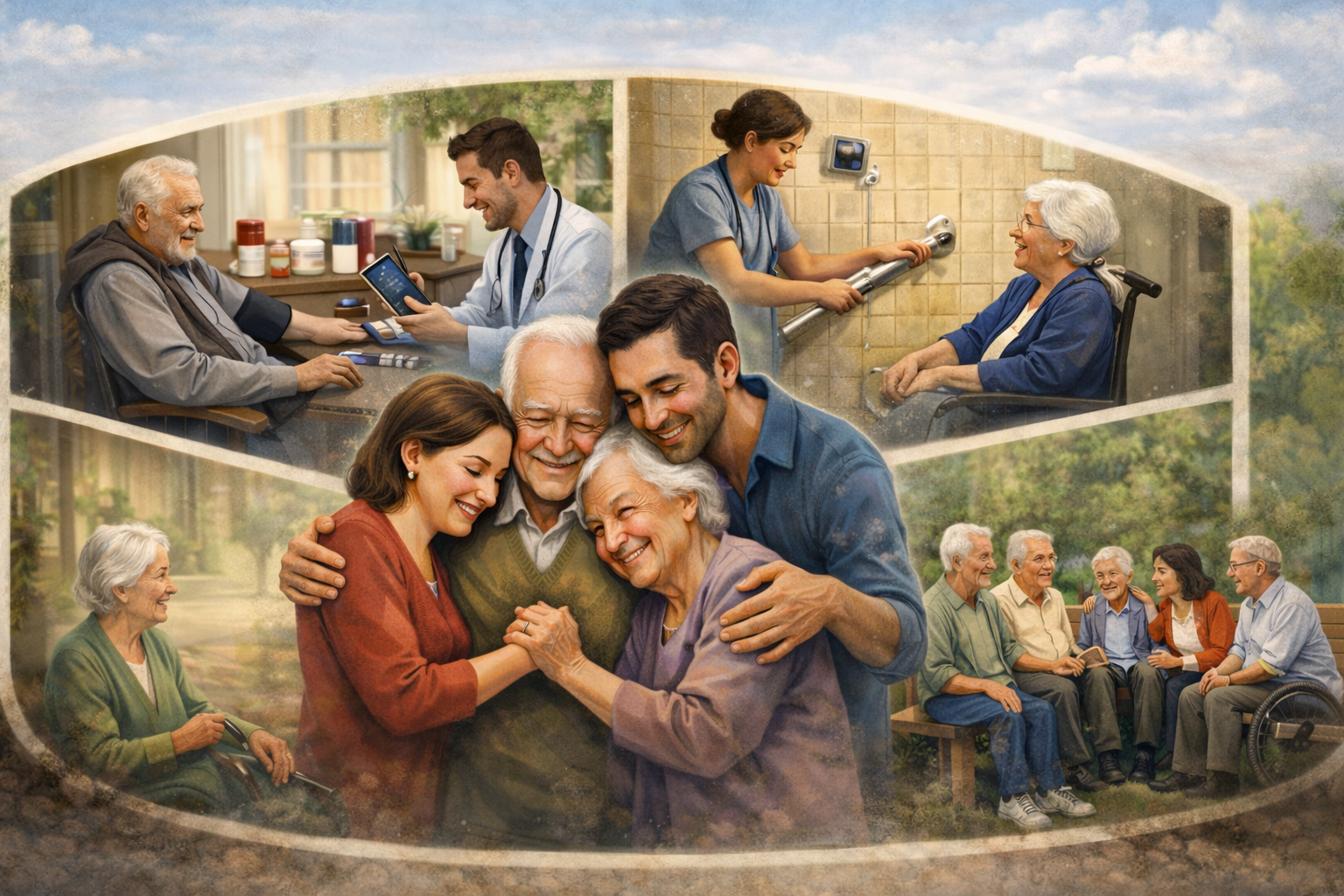
In an era of rapid demographic shifts, the world's population is aging at an unprecedented rate. By 2050, the number of people aged 60 and above is projected to double, with significant implications for healthcare, family structures, and societal support systems. Older adults often face challenges such as reduced mobility, sensory impairments, chronic conditions, and increased risk of falls or isolation. These vulnerabilities can compromise their safety, independence, and dignity. Assistive technology (AT)ranging from simple devices like grab bars and walkers to advanced smart home systems and wearable sensors has emerged as a critical tool for protecting elders. Far from being a luxury, AT is increasingly recognized as essential for enabling safe, independent living and reducing caregiver burden.
The World Health Organization (WHO) defines assistive technology as products, devices, or systems that maintain or improve an individual's functioning and independence. This includes everything from hearing aids and spectacles to sophisticated fall detectors, medication reminders, and remote monitoring tools. According to the WHO and UNICEF Global Report on Assistive Technology, over 2.5 billion people worldwide need at least one assistive product, yet nearly one billion are denied access, particularly in low- and middle-income countries where coverage can be as low as 3%. As populations age and non-communicable diseases rise, this need is expected to grow to 3.5 billion by 2050. In India, with its large elderly population and rising life expectancy, the demand is particularly acute, as highlighted by initiatives like the National List of Essential Assistive Products (NLEAP).
One of the primary ways assistive technology protects elders is through fall prevention and emergency response. Falls are a leading cause of injury among seniors; globally, one in four older adults experiences a fall each year, often resulting in fractures, hospitalization, or loss of confidence that leads to reduced activity. Simple low-tech solutions such as walkers, rollators, canes, rail bars, bedside guards, and modified commodes provide physical stability and prevent accidents in daily routines. More advanced options include wearable medical alert systems — pendants or wristbands with a help button that connects to a 24/7 monitoring center. Many now incorporate automatic fall detection using accelerometers and gyroscopes, which can alert family members or emergency services even if the user is unconscious or unable to respond.
Innovative devices are making strides in this area and more research is pouring in. For instance, AI-enabled attachments for walking sticks analyze gait patterns via pressure sensors and send real-time alerts for postural abnormalities or fall risks. Smart home technologies further enhance safety: motion sensors detect unusual inactivity (such as a prolonged period on the floor), while automated lighting activates at night to reduce trip hazards. Video doorbells and smart locks allow elders to verify visitors without opening the door, minimizing risks from strangers. These systems not only protect physical well-being but also provide peace of mind to families, especially in nuclear households common in urban India.
Beyond physical safety, assistive technology plays a vital role in health monitoring and medication management. Chronic conditions like hypertension, diabetes, and heart disease require consistent oversight. Wearable devices, including smartwatches with heart rate monitoring, activity tracking, and even ECG capabilities, can flag irregularities and prompt timely medical intervention. Medication adherence is another common challenge; forgetfulness or complex regimens often lead to complications. Smart pill dispensers with alarms, apps that send reminders, and automated dispensers that lock or dispense doses at scheduled times address this effectively. Remote monitoring systems using sensors or RFID wearables track vital signs or daily activity patterns and notify caregivers of deviations, such as missed meals or irregular sleep, enabling early detection of issues like urinary tract infections or cognitive decline.
For elders with cognitive impairments or dementia, AT supports memory and orientation. Voice-activated virtual assistants (like Amazon Alexa or Google Assistant) can set reminders for appointments, medications, or daily tasks, control home appliances, and even make emergency calls hands-free. GPS trackers integrated into wearables help locate wandering individuals, a common concern with Alzheimer's. Communication aids, including simplified smartphones or video-calling devices, combat social isolation — a major risk factor for depression and cognitive decline. Studies show that such technologies improve quality of life by fostering independence and a sense of connection. Surveys indicate that a majority of older adults using AT report enhanced mobility, safety, and overall well-being, with many crediting it for their ability to age in place rather than enter institutional care.
In the Indian context, assistive technology aligns well with cultural values of family caregiving while addressing practical gaps. Many seniors live with or near adult children, but work demands and urbanization often leave elders alone during the day. Affordable solutions like basic fall detectors, modified commodes, and therapeutic footwear are included in national essential lists to promote accessibility. Government schemes and NGOs are working to improve distribution, though challenges remain. Urban areas see greater adoption of smart devices, while rural elders may rely more on low-tech options due to connectivity issues. Culturally sensitive design such as voice interfaces in regional languages is crucial for wider uptake. The Edward & Cynthia Institute of Public Health (ECIPH) at Mangaluru undertook a research along with the All India Institute of Medical Sciences(AIIMS New Delhi) and WHO – SEARO Office and significant findings emerged on public perception of AT and its uses. The study came to be published in the World Health Organization journal.
Despite its benefits, barriers to adoption persist. Cost is a significant hurdle; advanced systems can be expensive, though prices are falling with innovation. Privacy concerns arise with data-collecting devices, as elders worry about surveillance or data breaches. Usability issues, including small buttons, complex interfaces, or lack of training, deter many. Stigma — viewing AT as a sign of dependence or disability — and fear of technology (technophobia) are common, especially among those with limited prior exposure. Lack of awareness about available options and insufficient professional counselling also slow progress. Studies highlight that while acceptance is often high once benefits are experienced, initial reluctance stems from perceived lack of need or functionality concerns.
To overcome these, a multi-pronged approach is needed. User-centred design that prioritizes simplicity, affordability, and cultural relevance is essential. Training programs for elders and caregivers, demonstration centers, and integration into primary healthcare can build confidence. Policy support like subsidies, insurance coverage for AT, and public-private partnerships can enhance access. In India, expanding the reach of NLEAP products and leveraging digital initiatives like Ayushman Bharat could bridge gaps. Research shows that when elders receive proper fitting, education, and follow-up, adherence improves dramatically, leading to measurable reductions in falls, hospitalizations, and caregiver stress.
The evidence is compelling: assistive technology does not merely supplement care; it transforms it. By reducing risks, promoting autonomy, and supporting active aging, AT protects elders from physical harm, emotional distress, and unnecessary institutionalization. Families benefit from reduced anxiety and burden, while societies save on healthcare costs. As one review noted, personal disease management devices and smart home solutions often yield significant improvements in outcomes.
In conclusion, as global populations gray, assistive technology must be viewed not as optional but as essential infrastructure for elder protection. Governments, innovators, healthcare providers, and families must collaborate to ensure equitable access. For elders, the right AT can mean the difference between vulnerability and vitality, between dependence and dignified independence. Investing in these tools today will safeguard the well-being of millions tomorrow, creating age-friendly communities where older adults thrive safely at home. With thoughtful implementation, assistive technology can help elders live longer, healthier, and more fulfilling lives.
About the author:
Srinivas Bishyoi and Edmond Fernandes are with the Department of Public Health, Yenepoya Deemed to be University