
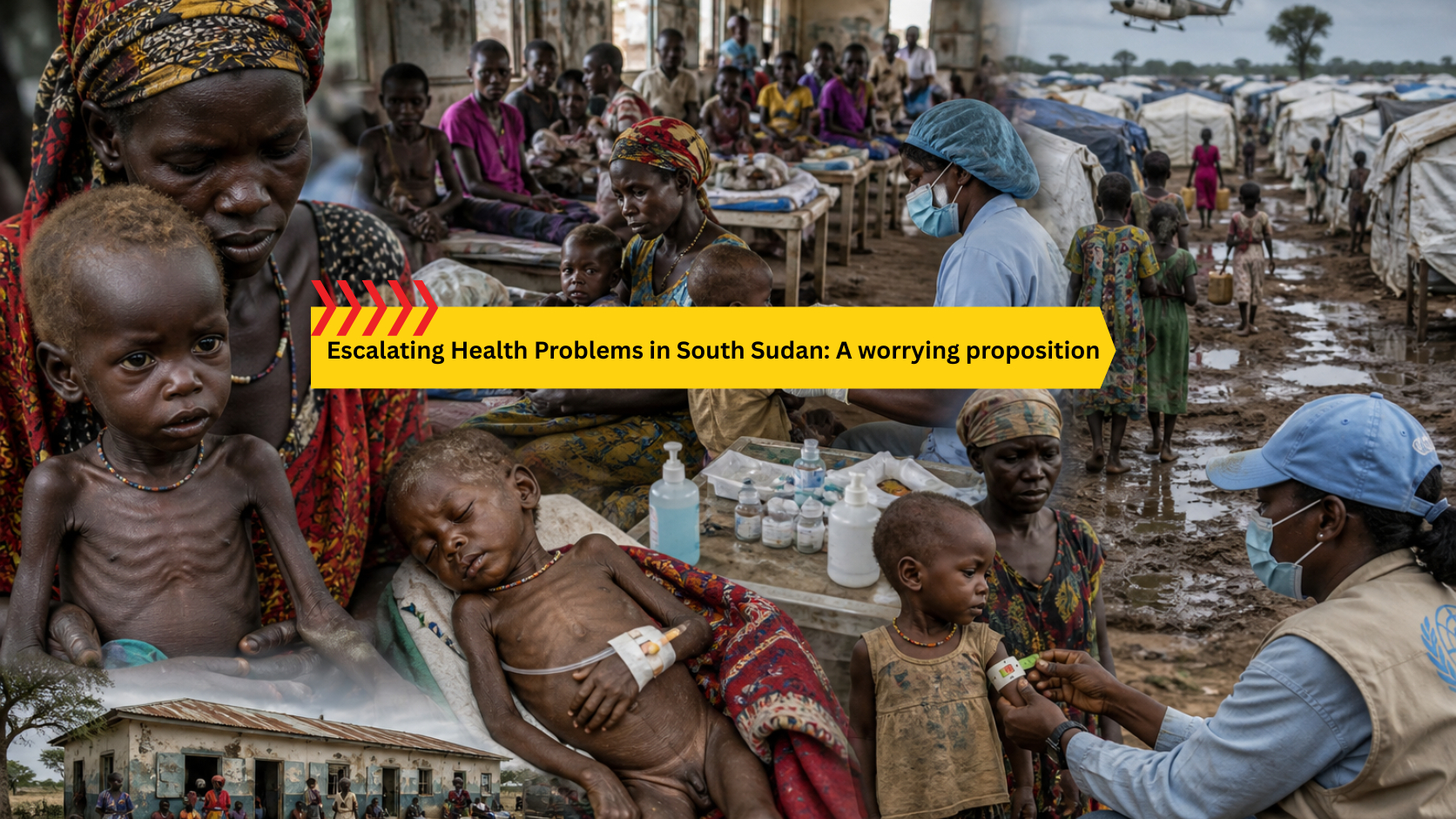
South Sudan, the world’s youngest nation, faces one of the most severe humanitarian and health crises of our time. In 2026, escalating conflict, climate shocks, economic collapse, and a near-collapsed health system have pushed millions to the brink. With over 7.8 million people,roughly 56% of the population—facing high levels of acute food insecurity between April and July 2026, health outcomes are deteriorating rapidly.
A storm of crises
Prolonged and renewed fighting, particularly in Jonglei and Upper Nile states, has triggered mass displacement, destroyed infrastructure, and restricted humanitarian access. Over 33 health facilities have been damaged or looted in recent months, leaving approximately 1.4 million people without basic care. Nationwide, nearly one-third of health facilities are non-functional, affecting millions.
Malnutrition has reached alarming proportions. An estimated 2.2 million children under five are suffering from acute malnutrition, with projections indicating up to 700,000 facing severe acute malnutrition (SAM)—the deadliest form. Pregnant and breastfeeding women (around 1.2 million) are also heavily affected. Malnutrition weakens immunity, creating a deadly cycle with infectious diseases.
Disease outbreaks compound the emergency. South Sudan is grappling with its largest cholera outbreak on record, alongside widespread malaria, measles, acute watery diarrhoea, and respiratory infections. The onset of the rainy season worsens transmission risks due to flooding and poor sanitation. In many areas, collapsed cold chains and supply shortages have disrupted immunization and treatment programs.
Underlying Drivers
The roots of this crisis run deep. Over a decade of instability has prevented the development of resilient health systems. Conflict disrupts farming, markets, and aid delivery, driving food prices higher and eroding livelihoods. Climate change-induced floods and droughts destroy crops and displace communities. Economic decline and massive influxes of returnees and refugees from neighbouring Sudan further strain limited resources.
The human cost is devastating. Children face stunted growth, cognitive impairment, and heightened mortality risk. Mothers struggle with complications during pregnancy and childbirth. Entire communities lose access to essential services, pushing coping mechanisms to unsustainable levels. Without urgent intervention, parts of the country risk famine.
A Call for Urgent Action
International organizations are working on the ground, providing therapeutic feeding, mobile clinics, vaccinations, and WASH support. However, severe funding shortfalls threaten these efforts. Humanitarian access remains hampered by insecurity and bureaucratic obstacles.
The escalating health problems in South Sudan represent more than a national emergency, they are a regional and global concern. The collapse of health services here risks wider instability and prolonged human suffering. Sustainable solutions require not only increased humanitarian funding but also meaningful progress toward peace, stronger national health systems, climate adaptation, and inclusive economic recovery.Immediate scaled-up support for nutrition, disease control, and health infrastructure is essential to save lives today and build resilience for tomorrow. South Sudan’s children deserve a healthier future, but time is running out. A preventive health approach built on integrated thematic convergent sectors will help mitigate this crisis to a reasonable extent.