
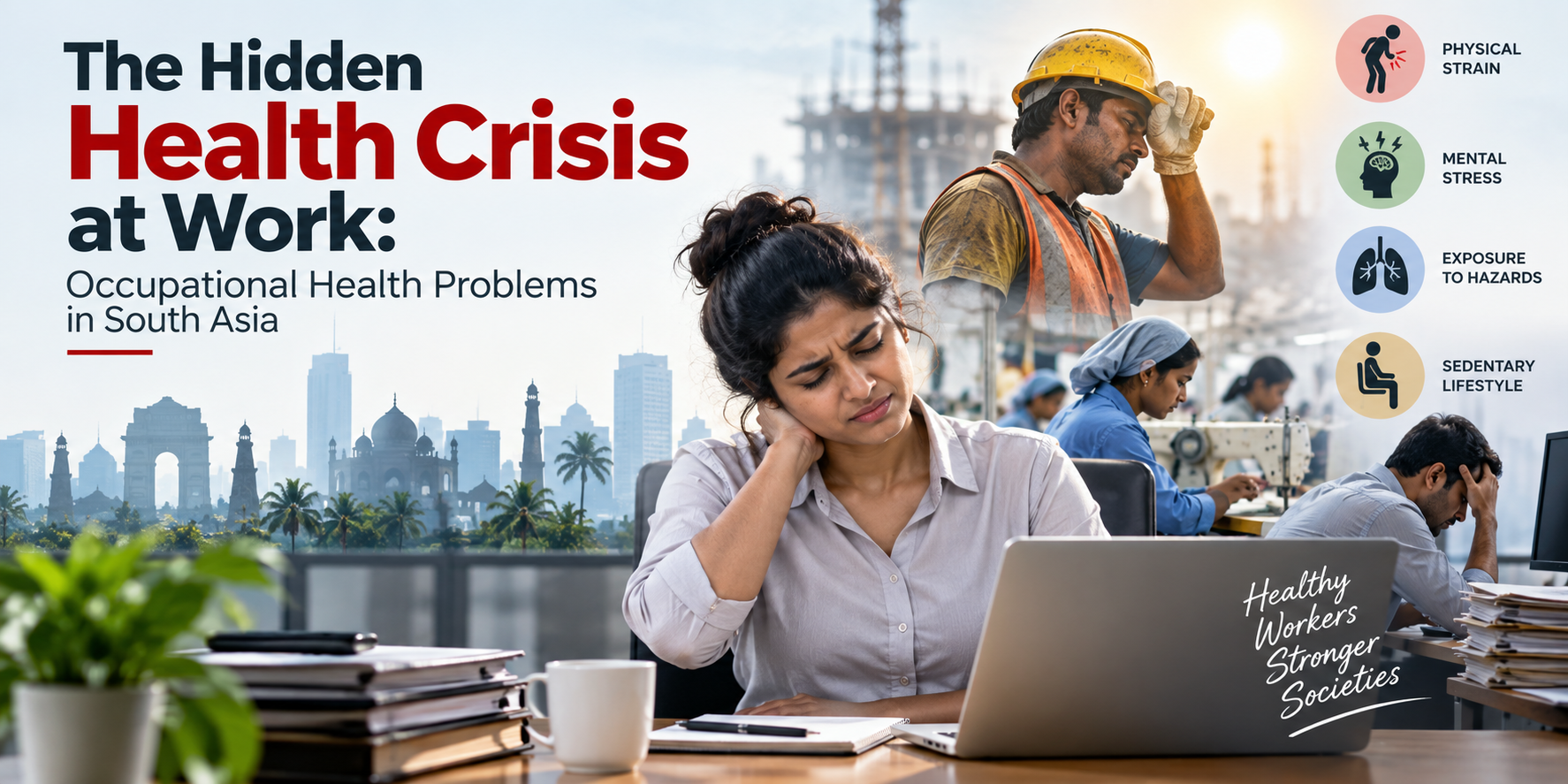
At 5:30 every morning, before most of the city has opened its eyes, a construction worker steps onto a crowded road and begins another day of work. He has worked on building sites for years. His hands are rough, his back frequently aches, and the dust from cement and concrete has become so familiar that he barely notices it anymore. There is no formal health check before his shift. There is no occupational physician asking about his breathing. If he does not work, he does not get paid.
By midday, the heat becomes oppressive. He drinks water when he can, wipes the sweat from his face and continues lifting, carrying and climbing. He knows the work is dangerous. But danger is a luxury to think about when a family depends on your daily wage.His story is not unusual.
Across South Asia, millions of workers begin their day under similar conditions. A farmer walks into a pesticide-treated field. A factory worker enters a noisy production floor. A sanitation worker handles waste that others would rather not touch. A domestic worker spends hours cleaning and lifting. A delivery rider battles traffic, pollution and extreme heat. A nurse begins another long shift. A garment worker performs the same repetitive movement hundreds of times a day.
They are all working. But are they all working safely?That is the uncomfortable question at the heart of occupational health in South Asia.
Occupational health is much more than preventing dramatic workplace accidents. It is about protecting a person’s physical, mental and social well-being from the hazards created or aggravated by work. The World Health Organization recognizes occupational health as an essential part of public health, encompassing the prevention of work-related diseases and injuries as well as the promotion of workers’ health.Yet for millions of workers across South Asia, occupational health remains almost invisible.
We notice the collapsed building, the factory fire or the fatal accident because they make headlines. We are far less likely to notice the worker whose lungs deteriorate slowly from years of dust exposure, the farmer repeatedly exposed to pesticides, the woman who develops chronic back pain from years of manual work, or the labourer who becomes ill after working for hours in extreme heat.These are occupational-health problems too.And they are often the problems that remain hidden until it is too late. South Asia needs a policy shift towards occupational health which integrates commercial determinants of healthcare and safety. Perhaps, we must begin somewhere.